06 February, 2022
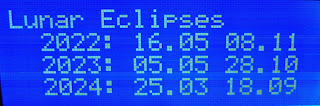
More functions for the Arduino GPS Clock


09 January, 2022
Magical speaker cables - part 2
 |
| Cable with large distance between the conductors (Schnerzinger) |
The first example had a large distance between the conductors and was placed on its own stand to get distance from the floor. It was designed to minimize capacitance between conductors. Another design criterion was to minimize the impact of vibrations created by the speakers themselves.
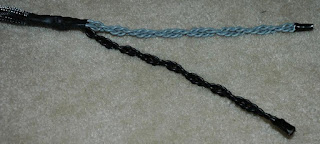 |
| Twisted multi-conductor cable |
There is no shortage of science-based claims for how cables affect sound. There are so many of them that this blog post, where my ambition is to say something about all of them, gets to be a little longer than I would have liked it to be. If you are impatient, you may go to the end and just see the conclusion. For the curious, I will consider the claims one by one.
02 January, 2022
Magical speaker cables - part 1
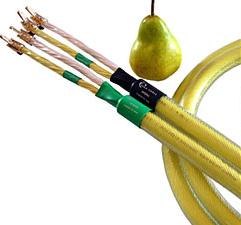 |
| Pear Anjou speaker cable |
What should one believe? Here I want to help clarify the concepts.
A climax in the cable dispute may have been reached in 2007 when the skeptic James Randi offered a reward of 1 million dollars if anyone could prove that speaker cables costing $2750 for a pair of 1 meter long cables provided any improvements. He was provoked by the claims of the Pear Anjou cables shown in the image.
26 October, 2021
Updated Arduino Multi Face GPS Clock
The GPSClock from last month has now been updated and software version 1.10 1.1.0 is available on Github. The main upgrade is the possibility to use a rotary encoder for selecting display screen or clock face.
In addition a new screen showing Easter for the next three years, according to both the Gregorian (Western) and Julian (Eastern) calendars, has been added as number 22. The dates are shown in the Gregorian calendar:

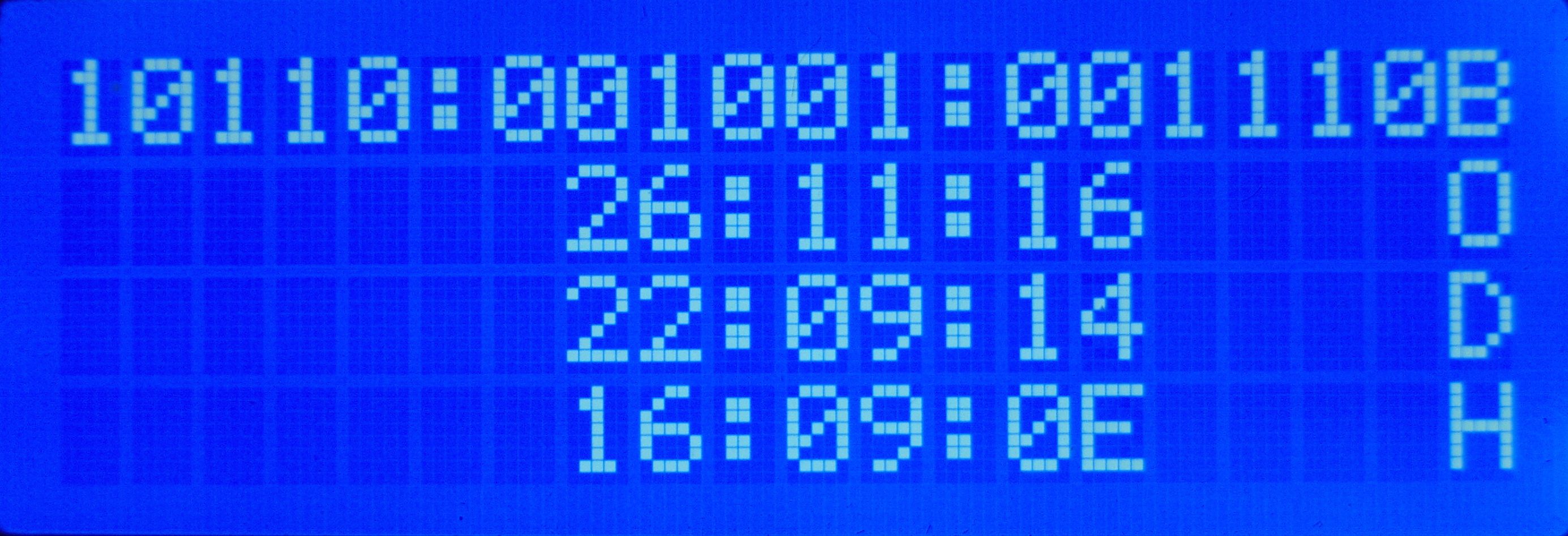
A new screen showing the clock in binary, octal, decimal, and hex format is screen 21:
29 September, 2021
Multi Face GPS Clock published
Version 1 of my Multi Face GPS Clock is here, as open source software for the Arduino Mega. It has some 22 19 different display screens showing time, location, solar and lunar positions and rise/set times. It shows UTC time as received from the GPS satellites and local time where it automatically adjust for summer time. The initial screen, no. 0, is this:

23 August, 2021
Finally figured out the moon

Finally, over the last few weeks I managed to adapt lunarCycle.c to Arduino and get it to work as shown in the display here. My ambition is now eventually to publish this project on GitHub as I’ve had several requests for it.
The display here shows local time and date, moon phase on line 2, present moon elevation and moon azimuth on line 3, and the next rise time of the moon and at which position on the final line. Follow label ‘ Multi-face GPS clock’ below for more posts about this clock.
10 July, 2021
Coordinated WSPR band hopping with the QRPLabs U3S

The recommended band hopping sequence cycles through 10 bands over a 20 minute period according to this table:
Band (m) 160 80 60 40 30 20 17 15 12 10
UTC Minute 00 02 04 06 08 10 12 14 16 18
20 22 24 26 28 30 32 34 36 38
40 42 44 46 48 50 52 54 56 58
UTC Minute 00 02 04 06 08 10 12 14 16 18
20 22 24 26 28 30 32 34 36 38
40 42 44 46 48 50 52 54 56 58
The multi-band U3S is capable of adhering to such a sequence. There are however three considerations that need to be taken into account.
14 April, 2021
Learning the hard way that plastic TO-92 is affected by humidity

I wasn't able to find waterproofed DS18S20 sensors, but I could find ones with DS18B20. I got one and connected it, but it only showed -1 C regardless of weather. The software in the Opentracker USB was not able to read it, although I have Arduino programs that can read both.
Subscribe to:
Posts (Atom)