|
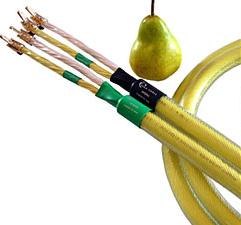
Cable with large distance between the
conductors (Schnerzinger) |
Part 1 of this article concluded that it is important to have thick enough cables in order to bring down the resistance. It also showed two examples of slightly more exotic cables, shown in the first two images here.
The first example had a large distance between the conductors and was placed on its own stand to get distance from the floor. It was designed to minimize capacitance between conductors. Another design criterion was to minimize the impact of vibrations created by the speakers themselves.
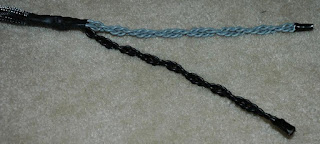 |
| Twisted multi-conductor cable |
The next example was a cable made by
twisting together many thinner conductors, in this case a
do-it-yourself cable. It was designed to have the least possible inductance and also to minimize the skin effect.
There is no shortage of science-based claims for how cables affect sound. There are so many of them that this blog post, where my ambition is to say something about all of them, gets to be a little longer than I would have liked it to be. If you are impatient, you may go to the end and just see the conclusion. For the curious, I will consider the claims one by one.